
Nutrition · Energy
Whole Food Patterns and the Male Energy Cycle: A Week of Observations
Nathan Lim
·

The habit journal entry for a Tuesday in February read: "Moved at 06:45, thirty minutes, outdoor. Slept at 22:30. Woke once." The pattern repeated across eleven of fourteen recorded mornings. The correlation was not the point of the record — but the record made the correlation visible.
The habit journal was not designed as a study. It began as a personal documentation practice: a single notebook entry each morning noting movement (yes or no, type, duration, setting), and a single entry each evening noting approximate sleep quality (settled or interrupted, time to fall asleep, wake-up frequency). Over fourteen days in February, a pattern emerged that was consistent enough to warrant editorial reflection.
On eleven mornings, movement was recorded before 07:30 — typically a thirty-minute walk or bodyweight session in a local park near Jalan Tun Razak, where the morning air quality before the city's heat builds is notably different from midday conditions. On those eleven evenings, the sleep quality record noted a settling time of under twenty minutes and no more than one night-waking event. On the three mornings when movement was absent, two of the three evening records noted a longer settling time and more fragmented rest.
This is not a controlled observation. Variables including the previous evening's nutrition, screen time before sleep, ambient temperature, and occupational stress were not systematically tracked. The record stands as a personal habit documentation, not a research output. Its value is in the consistency of the self-reported pattern — and in the decision to record it at all.
The association between regular physical movement and sleep quality in adult males is well-represented in published wellness and nutritional research. A 2021 meta-analysis published in Sleep Medicine Reviews examined data from 66 studies and concluded that regular aerobic movement was associated with improved sleep onset and reduced night-waking frequency in adult populations. The mechanisms proposed by the researchers centre on thermoregulatory effects, cortisol rhythm patterns, and what the study terms "sleep drive accumulation" — the gradual build-up of adenosine across waking hours that is associated with sleep pressure.
Morning timing is a specific variable that has attracted its own research attention. A 2019 study in Vascular Health and Risk Management noted that morning movement exposure was associated with energy and alertness habits in daily practice when compared with sedentary morning baselines. The study population was small and its generalisability limited, but the directional finding aligns with a broader pattern in the published wellness literature.
In the Malaysian tropical context, an additional consideration is the role of morning light exposure. Circadian rhythm research consistently notes that morning natural light exposure is associated with daily energy rhythm and recovery awareness — the photoentrainment process that anchors the body's internal clock to the local day. Outdoor morning movement in Kuala Lumpur, where ambient light levels before 08:00 are considerably higher than the indoor baseline, combines the movement stimulus with the light exposure stimulus in a single practice.
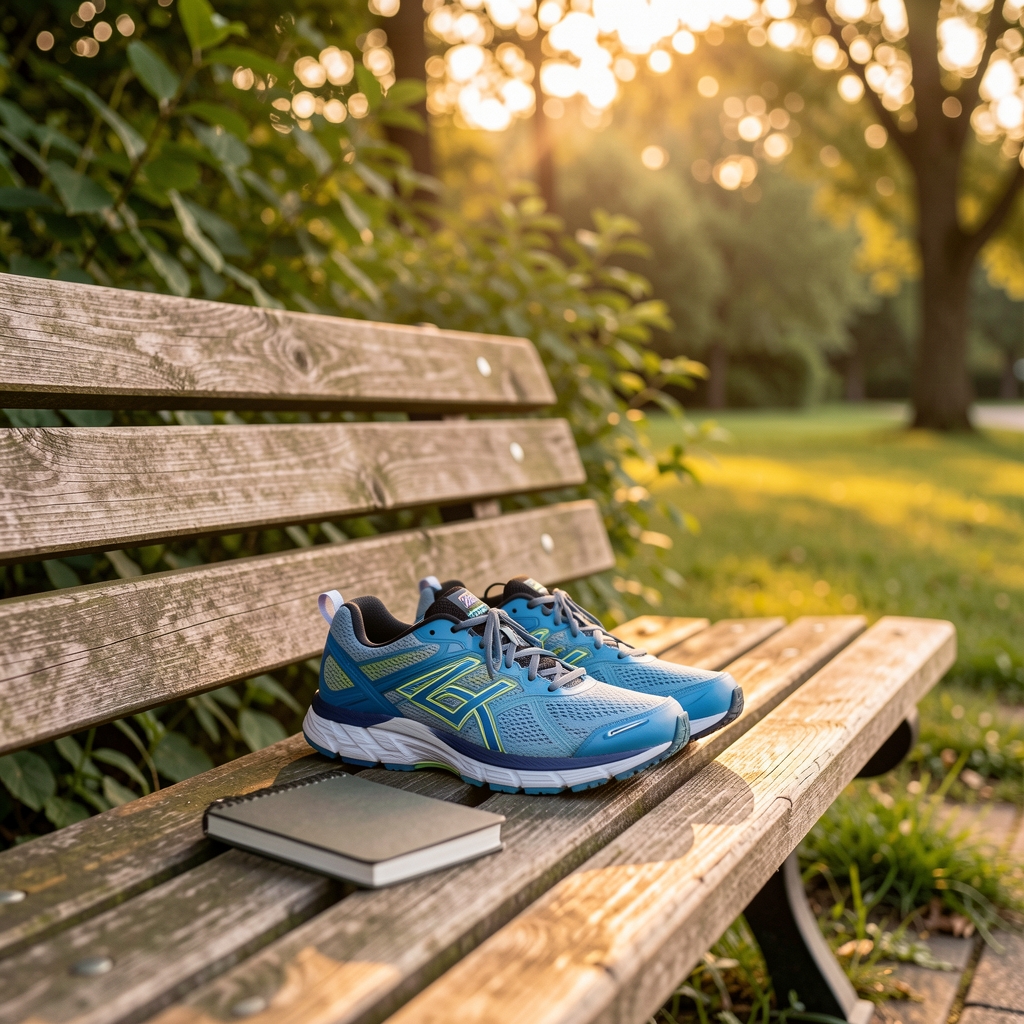
Kuala Lumpur's urban green spaces are underused as a wellness infrastructure in most men's lifestyle conversations. The city's network of public parks — Titiwangsa, Perdana Botanical, and the smaller neighbourhood parks adjacent to most residential areas — provide accessible outdoor movement settings that are free, well-maintained, and populated with other early-morning practitioners. The social texture of these spaces at 06:30 is distinct from their midday character: a quieter, more habitual group of walkers, runners, and bodyweight practitioners who return each morning with minimal variation.
The habit journal noted the social dimension as a contributing factor to consistency. On mornings when the recorded movement session coincided with the presence of other regulars in the park, the session duration was typically longer than when the space was empty. This aligns with what social habit researchers describe as "ambient accountability" — the low-level motivating effect of practising in the presence of others engaged in the same activity, without formal commitment or competition.
The setting also matters for the thermal dimension. Early morning outdoor movement in Kuala Lumpur at 06:30–07:00 is conducted at roughly 25–27°C with moderate humidity — physically demanding enough to register as genuine physical output awareness, but not so extreme as to require recovery from the session itself. The habit journal noted several occasions where an attempt to replicate the session at 11:00 on a non-work day produced a noticeably different physiological experience and a shorter recorded duration.
"The morning window in Kuala Lumpur is not a scheduling preference — it is a thermal fact. The city gives you roughly ninety minutes before the conditions change the nature of the effort entirely."
— Field notes, Day 9, Kuala Lumpur, March 2026
One of the more useful framings from the habit journal process was the reorientation of sleep quality from outcome to practice. The conventional framing positions sleep as something that happens to a person — good or bad night, the product of circumstances. The journal practice shifted this: sleep quality became a record of the day's habits, readable in retrospect and predictable, with moderate confidence, from the morning onward.
Published research on habit formation consistently notes that tracking a behaviour strengthens the habit loop around it. The simple act of recording morning movement and evening sleep created a visible relationship between the two that informed the next day's morning decision. On the three non-movement mornings in the observation period, two were deliberate choices made in the knowledge that they would likely affect the evening sleep record. That knowledge did not override the decision — but it made the decision conscious rather than passive.
The editorial observation here is that habit journaling — even in its simplest form — functions as a low-cost feedback loop for the practices it records. For active men in Malaysia interested in the relationship between their morning movement habits and their sleep quality, the most practical starting point is not a research protocol. It is a notebook and a consistent record.
Editorial note: Articles published on Dralven Notebook are editorial in nature and reflect the writers' observations on everyday wellness habits, natural lifestyle practices, and daily routines for active men. The content is not intended as professional advice and does not replace consultation with a qualified health professional. Readers with specific health concerns are encouraged to speak with a qualified professional.

Nathan Lim is the lead editor of Dralven Notebook. Based in Kuala Lumpur, he documents everyday wellness habits and natural lifestyle practices for active men in Malaysia, drawing on published nutritional and wellness research alongside first-hand habit journaling.
More by Nathan Lim →